
30 Mar., 2026
LED Screen: Differences between DIP SMD GOB COB MIP
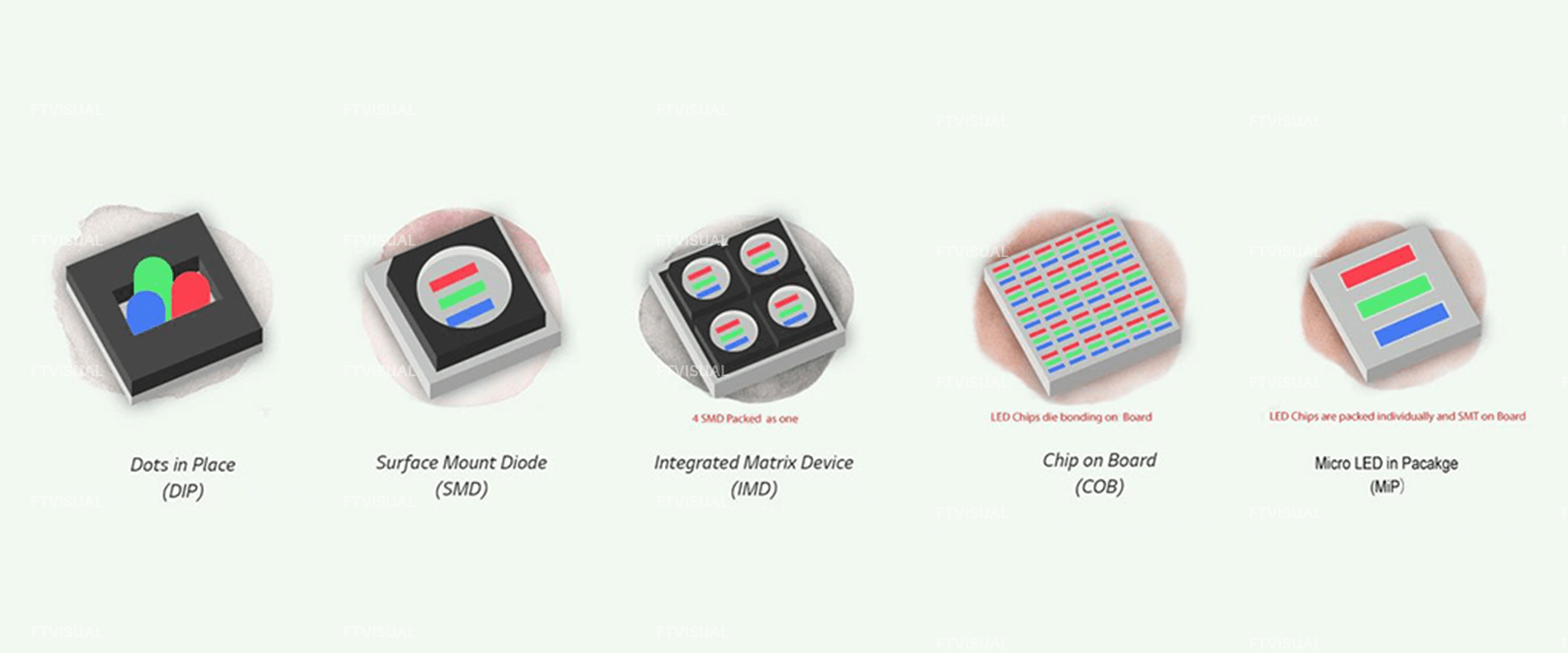
LED display technologies differ primarily in how the LED chips are packaged, mounted, and protected. The primary packing types—DIP, SMD, GOB, COB, and MIP—differ significantly in image resolution, durability, brightness, and manufacturing method.
1. DIP (Dual In-Line Package)
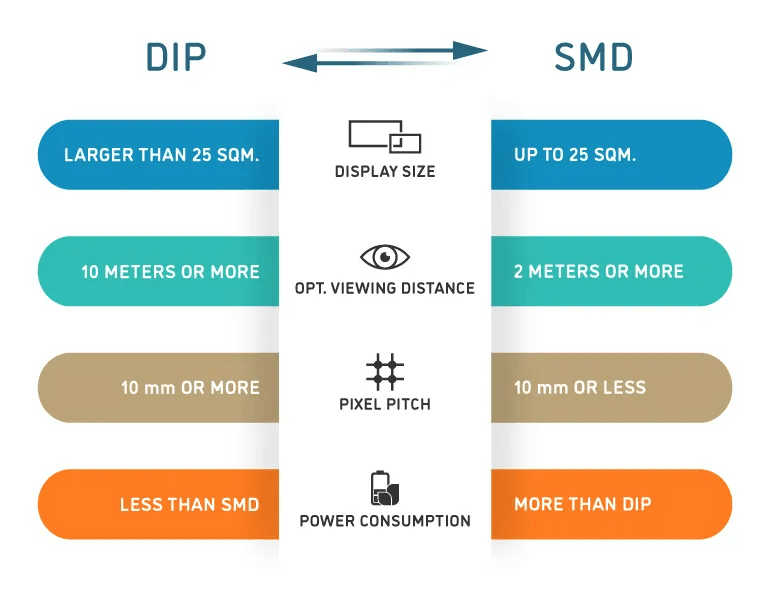
DIP (Dual In-Line Package): Traditional, highly visible individual colored LEDs (Red, Green, Blue) soldered into boards. Best for large, distant outdoor billboards due to high brightness but offers poor resolution.• Best for: Outdoor digital billboards and high-brightness stadium displays.
• Pros: Exceptionally high brightness and extreme weather/shock resistance.
• Cons: Large footprint prevents high pixel density; unsuitable for close-up viewing.
2. SMD (Surface-Mount Device)
SMD (Surface-Mounted Device): The long-standing standard where 3 RGB diodes are placed on a single chip. Cost-effective and excellent at close viewing distances, but leaves diodes exposed to physical damage or moisture.• Best for: Indoor screens, control rooms, and fine-pitch video walls.
• Pros: Superior color blending, wide viewing angles, and the ability to achieve high resolutions (4K/8K).
• Cons: Exposed diodes are vulnerable to physical impact, moisture, and static.
3. GOB (Glue-On-Board)
GOB (Glue on Board):An upgraded, hardened version of SMD technology. A transparent, high-density gel or epoxy glue covers the entire surface of the LED module.• Best for: Rental screens, stages, and high-traffic interactive displays.
• Pros: Highly resistant to moisture, dust, and physical impact. Excellent anti-glare properties.
• Cons: The glue layer can slightly reduce the overall brightness and is harder to repair.
4. COB (Chip-on-Board)
COB (Chip on Board): Mounts the raw LED chips directly onto the circuit board rather than using individual packages. Provides a seamless, highly durable, and high-contrast screen that is perfect for ultra-fine pitch indoor displays (e.g., control rooms, boardrooms).• Best for: Premium, fine-pitch indoor LED walls and corporate displays.
• Pros: Unmatched color uniformity, no moiré patterns, high durability, and superior heat dissipation.
• Cons: Higher initial cost; individual pixel-level repair is nearly impossible (usually requires replacing a whole module).
5. MIP (Mini/Micro LED in Package)
MIP (Micro LED in Package): Takes tiny MicroLED chips and places them into miniature packages before mounting them. It is a bridging technology that combines the high visual quality of MicroLEDs with easier manufacturing and repairability.• Best for: Ultra-High Definition (UHD) and micro-pitch requirements (P0.7 or smaller).
• Pros: Incredible pixel density, low energy loss, and high contrast levels.
• Cons: Extremely high manufacturing complexity and cost.