
23 Apr., 2026
How to choose Outdoor LED Screens brightness?
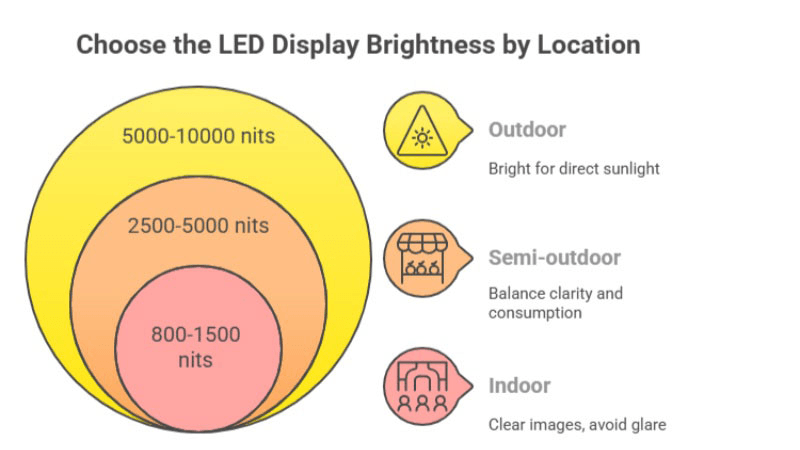
Choose outdoor LED screen brightness (measured in nits or cd/m²) based on its sunlight exposure and installation orientation. Typical requirements range from 5,000 to 10,000+ nits to fight glare and maintain clear visibility during the day.
1. Match Brightness to the Environment
• Shaded/Covered Areas: 3,000–5,000 nits. Ideal for covered patios, outdoor malls, or under heavy awnings.• No Direct Sunlight: 3,500–5,500 nits. Great for north-facing walls or semi-outdoor spaces that do not receive direct sunlight.
• Direct Sunlight: 6,000–7,500 nits. Required for outdoor billboards or screens facing East/West that encounter direct, unfiltered sunlight.
• Extreme Environments: 8,000–10,000+ nits. Used for highway digital billboards or desert climates with maximum ambient light.
2. Consider Screen Orientation
• East/West Facing: Requires at least 7,000 nits as the screen directly faces the sun during sunrise and sunset.• North/South Facing:Can use lower brightness (around 6,000 nits) as the sun rarely shines directly onto the display surface.
3. Factor in Day vs. Night
An outdoor screen running at 7,000+ nits during the night will cause extreme glare for viewers and waste significant energy.• Day vs. Night: Maximum brightness is for the afternoon. If the display runs at night, it will cause extreme glare and light pollution unless dimmed to 10–20% of its max output.
4.Recommended Brightness by Use Case
• Commercial Billboards: 5,000 to 8,000 nitsEnsures text and ads pop against daytime glare.• Stages & Concerts: 8,000 to 15,000 nits Demands higher output to cut through aggressive theatrical lighting.
• Stadiums & Arenas: 6,000 to 10,000 nit. Needed so fans seated far away can see clearly.
5.Technical Considerations
• Auto-Brightness Controls: Outdoor led walls must be paired with an illumination intensity sensor and controller software (like Novastar) to adjust output in real-time. This prevents nighttime eye strain and excessive energy use.• Color Fidelity: While high brightness is necessary for readability, technicians often prefer to drop the brightness to 15-20% for better color fidelity if it is being professionally filmed or broadcast.
6.Additional Factors to Consider
• Energy Efficiency: Higher brightness means higher power consumption and heat. It is a good practice to choose a led screen that automatically dims to 500–1,000 nits at night to balance visibility with electricity costs and to prolong LED lifespan.• Contrast Ratio: Raw brightness isn't enough; pair it with a contrast ratio of at least ≥ 5000:1 so colors don't look washed out in direct sunlight.
• Viewing Distance: If your audience is close (e.g., in a mall courtyard, viewing distance of 10-30 meters), 4,000–5,000 nits is sufficient. Highway billboards further away will require the full 7,000+ nits.
FTV LED Display Solutions
FTV offer professional LED screen solutions to fit various outdoor screen needs, you can browse below:Outdoor LED Screen: High brightness, great visual, and super robust design.
Rental LED Screen: Easy and fast to set-up, robust& reliable design.
Creative LED Screen: Customized LED Walls with various shapes.
For more solutions and customization, please be free to contact us.