
19 May, 2026
Key questions you need to know about led wall
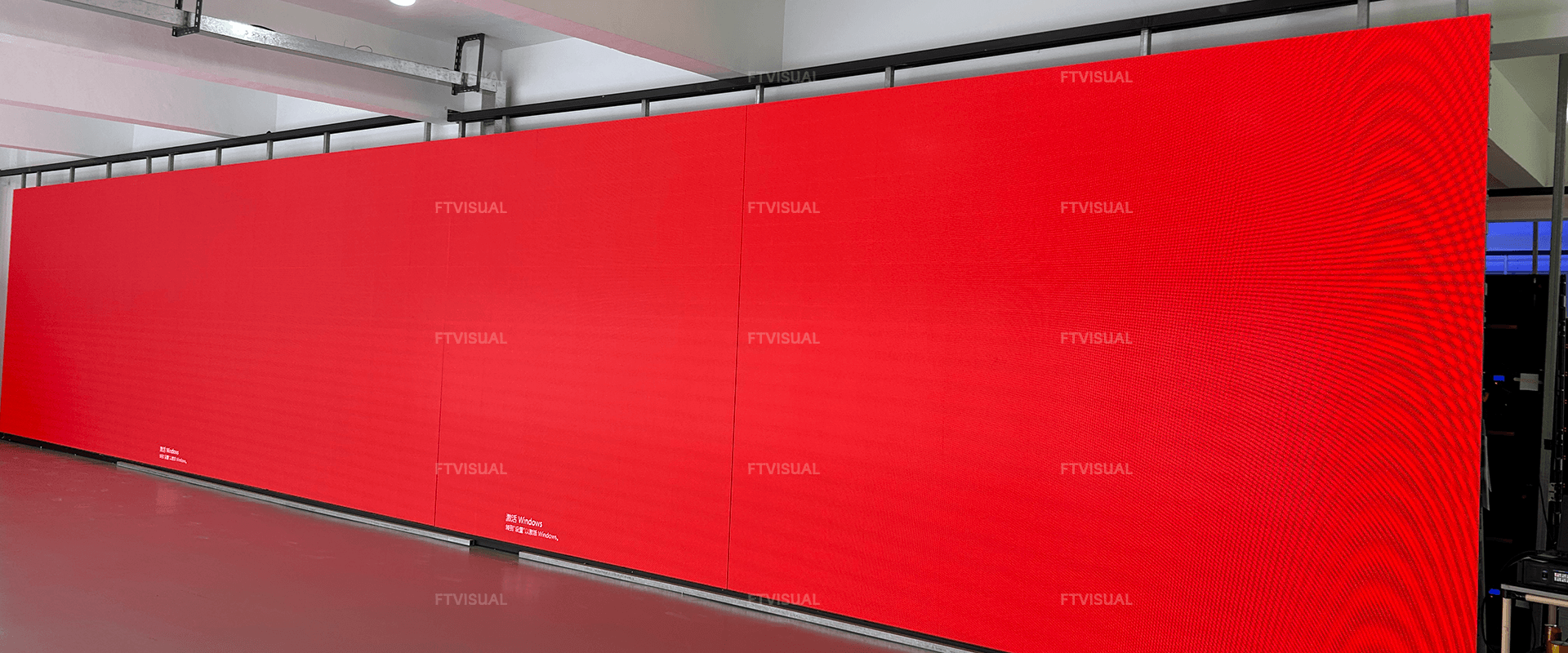
An LED wall is a large, seamless display built by tiling multiple individual LED panels together. Unlike regular TVs, they are fully modular, allowing you to create displays of virtually any size, shape, or curve, and they offer significantly higher brightness for both indoor and outdoor spaces.
Whether you are designing an indoor corporate space or an outdoor venue, the most common led wall questions center around key technical specs and setup requirements include:
1. What is Pixel Pitch and why it matters?
A breakdown of each resolution standard, from standard HD to ultra-premium 10K, highlights these differences:• What it is: Pixel pitch is the distance in millimeters between the centers of two adjacent LEDs. For example, a 1.5 mm pitch means the LEDs are 1.5 mm apart.
• Why it matters: It determines your optimal viewing distance. A tighter video wall pitch (e.g., 1.2 mm - 2 mm) is best for up-close viewing (like boardrooms or home theaters), while a larger pitch is perfectly fine for outdoor billboards where viewers are far away.
2. How do I choose the right resolution?
• General Rule of Thumb: Your closest viewing distance in meter is roughly 1~1.5times to the pixel pitch in millimeters.• Examples For instance, if your front-row audience will be sitting 2m away, a 2mm or 1.5mm pixel pitch will deliver a crisp, clear image without showing visible "dots."
3. Will it be bright enough?
• Indoor LED walls: Usually require between 500 to 1,000 nits of brightness to look vibrant under indoor lighting.• Outdoor LED walls: Require much higher brightness, typically starting at 5,000 nits or higher, to remain clearly visible in direct sunlight.
4. What about maintenance and installation?
•Front AccessMost commercial LED walls offer front-servicing, meaning technicians can pop out individual modules from the front using a magnetic tool, eliminating the need to tear down the entire wall for repairs.•Refresh Rate Additionally, pay attention to the refresh rate. You will want a LED display rated at 3840Hz or higher to prevent screen flickering, especially if the wall will be on camera.
5. What are the core components?
A standard LED Wall setup is driven by four primary elements:• LED Panels: Also called LED Cabinets, it’s the physical tiles to form a giant LED Wall.
• Sending/Receiving Cards: Hardware that processes video signals and tells each pixel what to display.
• Video Processors: Devices that map content and allow you to blend multiple inputs on a massive screen.
• Power Supplies:The hardware that converts high-voltage alternating current (AC) into the stable, low-voltage direct current (DC) required to drive LED modules.
FTV video wall Solutions
FTV offer professional LED Wall solutions, you can browse part of them below:Indoor LED Wall: Super fine pitch, great visual, work for DCI-P3 Wide Color Gamut
Outdoor LED Screen: High brightness, great visual, and super robust design.
Rental LED Screen: Easy and fast to set-up, robust& reliable design.
Creative LED Screen: Customized LED Walls with various shapes.
For more solutions and customization, please be free to contact us.