
27 May, 2026
Questions about led display power supply
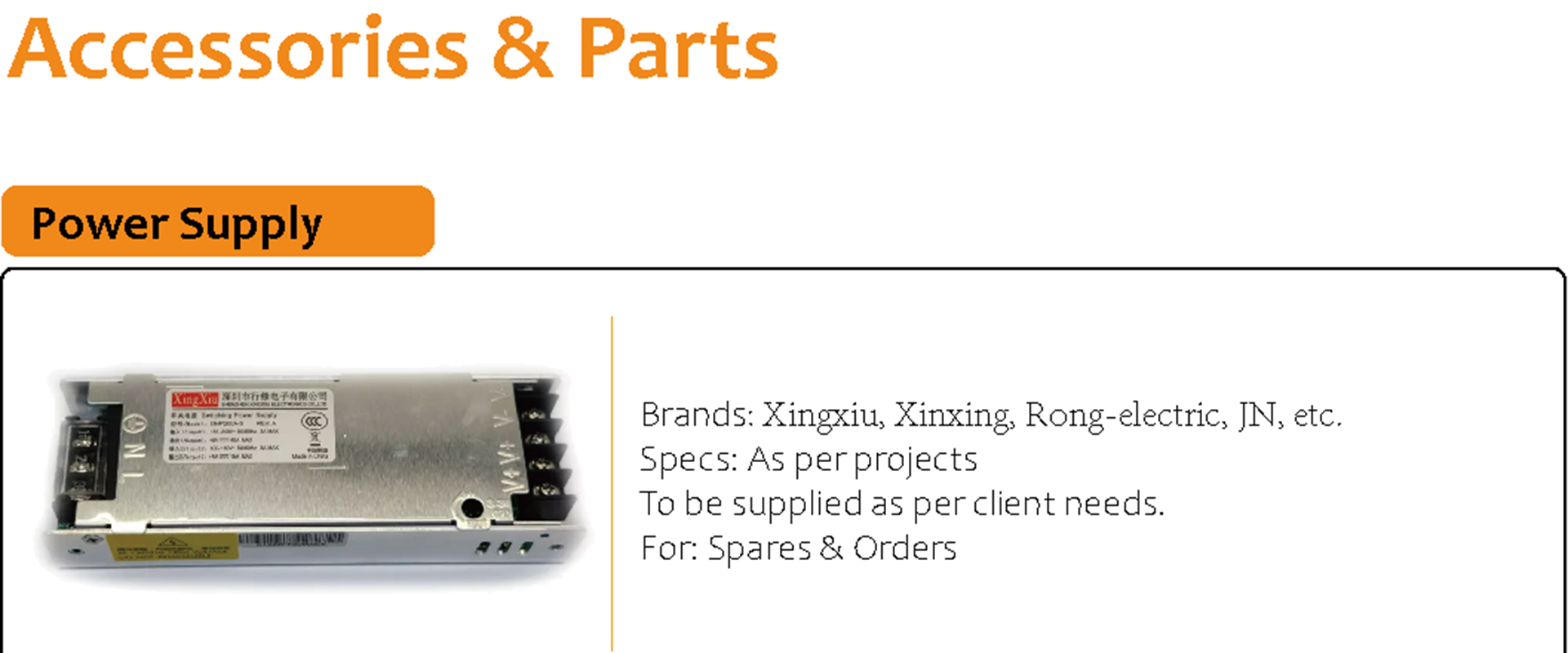
An LED Display power supply (PSU) converts your building's high-voltage AC input into safe, stable low-voltage DC power (commonly 5V, 12V, or 24V) for your panels. Its primary function is to deliver steady current while preventing voltage surges, dips, and hardware failures.Here are the most common questions regarding LED display power supplies and their answers:
1. What voltage do LED displays use?
Voltage depends directly on the type of LED modules your display uses.• 5V: The industry standard for individual LED module hubs and tight pixel pitches because it matches the forward voltage of the LED diodes themselves.
• 3.8V or 4.2V: Used in energy-saving "common cathode" displays to minimize heat and power consumption.
• 12V / 24V: Often used for larger exterior panels, strip backlighting, or long cable runs because they suffer less voltage drop over distance.
2. How to calculate the power supply wattage and quantity?
You should never push a power supply to its absolute limit. Follow this standard formula to calculate your power needs:Total Wattage Needed=Module Max Power (W) x Number of Modules x Safety Factor(1.2 to 1.3). • Safety Buffer: Always apply a 20% to 30% safety margin so the power supply runs efficiently and stays cool.
• Real-world Load: While it's best to size your infrastructure for the maximum theoretical wattage, normal studio or video playback running power is often only 1/3 to 1/2 of the absolute maximum.
• Example: For a total requirement of 500 Watts, choose a power supply rated at ≥ 600 Watts.
3. What specifications should I look for when buying?
• Certifications: Only purchase units with built-in protections against overvoltage, overcurrent, short-circuits, and thermal shutdown. Look for CE, UL, or FCC marks for safety compliance.• Form Factor: Standard enclosed power supplies (like 200W 40A or 300W 60A models) are ideal for indoor rental screens. For thin, wall-mounted displays, ultra-thin power supplies are required.
• Efficiency Ratings: High-efficiency power supplies waste less energy, produce less heat, and ultimately prolong the lifespan of your display.
4. What causes LED power supplies to fail?
Common causes of failure include poor ventilation (heat buildup), voltage spikes, or overloading the unit by running it continuously without a safety buffer. Signs of a failing power supply include screen flickering, faded brightness, or uneven brightness across different panels.FTV LED Screen Solutions
FTV offer turn-key LED screen solutions to save client cost and time, you can browse below:Indoor LED Wall: Super fine pitch, great visual, work for DCI-P3 Wide Color Gamut
Outdoor LED Screen: High brightness, great visual, and super robust design.
Rental LED Screen: Easy and fast to set-up, robust& reliable design.
Parts & Accessories: Drivers, Modules, Controllers, Cables etc.
Screen Related: Please ask FTV sales for support.
For more solutions and customization, please be free to contact us.