
11 Jun, 2026
What is LED Screen Driver IC and how it works?
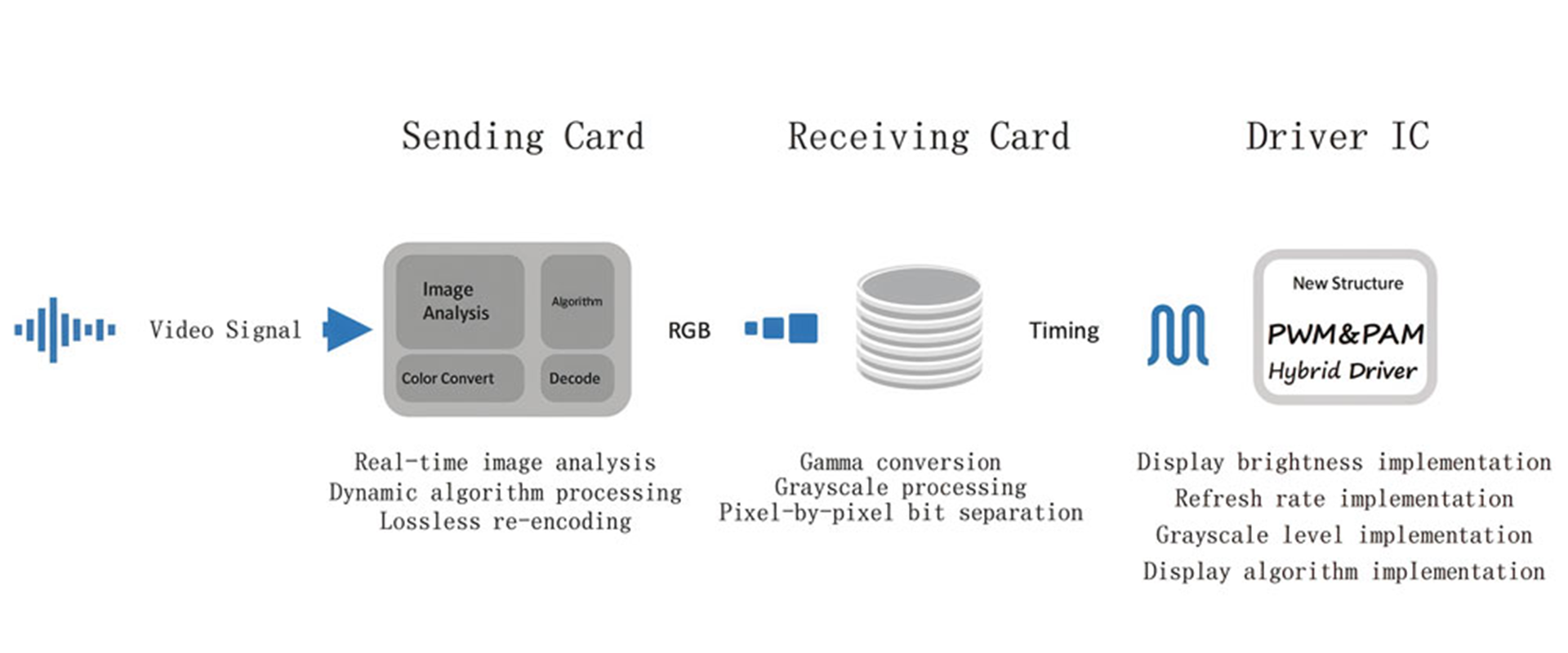
An LED display driver IC (Integrated Circuit) is the core "brain" that controls the voltage and constant current powering individual LEDs. It dictates crucial visual factors like refresh rate, grayscale depth, and color accuracy.
1. Classification by Functionality
Unlike standard light bulbs that just plug into a wall, LEDs are current-driven devices. Their brightness fluctuates strictly with the current, not the voltage.• Constant Current Driver ICs: Provide a steady, consistent flow of electricity to each LED bead, regardless of power fluctuations. They prevent color distortion and brightness inconsistencies.
• PWM (Pulse Width Modulation) ICs: Advanced chips that rapidly pulse the LEDs on and off. This allows the screen to achieve high refresh rates (up to 3840Hz or higher) and deep grayscale depth (14-bit to 16-bit), which eliminates scan lines during photography or video recording.
• Matrix Control / Scan Rate Control Chips: Manage rows and columns of large-scale LED arrays, optimizing the trade-off between brightness and power consumption.
• Energy-Efficient ICs: Built to reduce heat generation and power consumption in 24/7 commercial displays and control rooms
2.Basics and Function of IC
• What does an LED driver IC do? It interprets instructions from the receiving card and precisely controls the on, off, and brightness states of LEDs to display video and images.• Why not use voltage to control brightness? LEDs are current-driven devices. The IC provides a constant current source, which ensures stable light emission and prevents screen flickering.
• What is grayscale? Grayscale controls the color depth and gradients (e.g., 14-bit or 16-bit) by rapidly switching the LED on and off. Higher grayscale yields richer, more realistic colors.
3.Why Driver ICs Matter for Display Quality
• Refresh Rate: IC capability dictates how many times per second the screen updates, measured in Hertz (Hz). High-end ICs support 3840Hz or higher, preventing screen flickering during photography or live event broadcasting.• Grayscale Control: Advanced ICs enable up to 16-bit grayscale, ensuring that colors transition smoothly instead of appearing blocky or banded, especially at low brightness levels.
• Ghosting & Dimming Prevention: Premium ICs include features like dual-latch or pre-charge, which fix low brightness efficiency and stop lingering "ghost" images during dark scenes.
4. Common Driver IC Brands and Models
• Macroblock (MBI): A premium industry standard.o Standard: MBI5024, MBI5042
o High-Refresh/PWM: MBI5124, MBI5153, MBI5252
• Chipone (ICN) : Widely used in cost-effective and standard commercial displays.
o Standard: ICN2028
o Dual Latch / High Refresh: ICN2038S, ICN2053, ICN2153
• SUMACRO: Common in mid-range panels.
o Standard: SUM2017
5. Troubleshooting and Repair
• What are the visual symptoms of a faulty IC?Common signs include a large, abnormal color block (e.g., a bright red or green square), a missing line of pixels, image ghosting, or vertical/horizontal lines.
• How do I replace a bad IC?
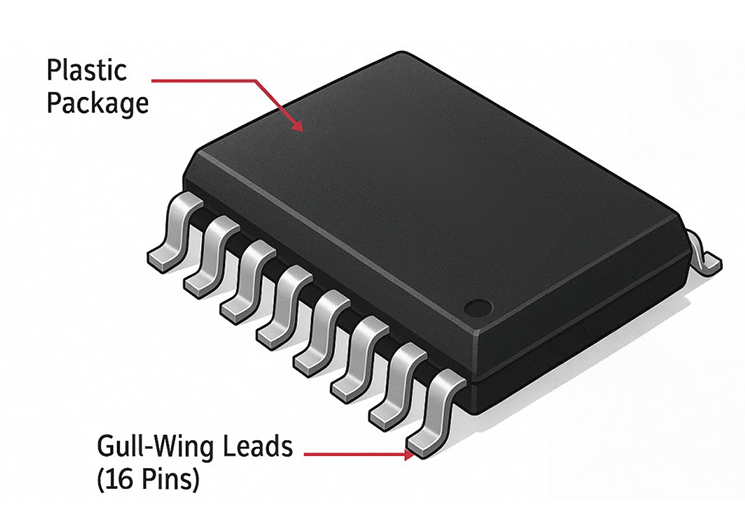
The typical process involves removing the module's plastic mask, melting the solder on the pins with a soldering iron (usually around 370°C to 400°C), removing the broken chip with tweezers, and carefully soldering the new one in place.
FTV LED Screen Solutions
FTV offer turn-key LED screen solutions to save client cost and time, you can browse below:Indoor LED Wall: Super fine pitch, great visual, work for DCI-P3 Wide Color Gamut
Outdoor LED Screen: High brightness, great visual, and super robust design.
Rental LED Screen: Easy and fast to set-up, robust& reliable design.
Creative LED Screen: Customized LED Walls with various shapes.
For more solutions and customization, please be free to contact us.