
15 Jun, 2026
What Is Virtual Pixel?
Virtual pixel technology (or dynamic pixel technology) is a software and hardware method that allows an LED wall to display a higher perceived resolution than its physical hardware possesses. It works by using algorithms to share and blend light from adjacent physical LEDs, creating new "virtual" pixels that make the screen appear sharper and denser.
1.How Virtual Pixel Works
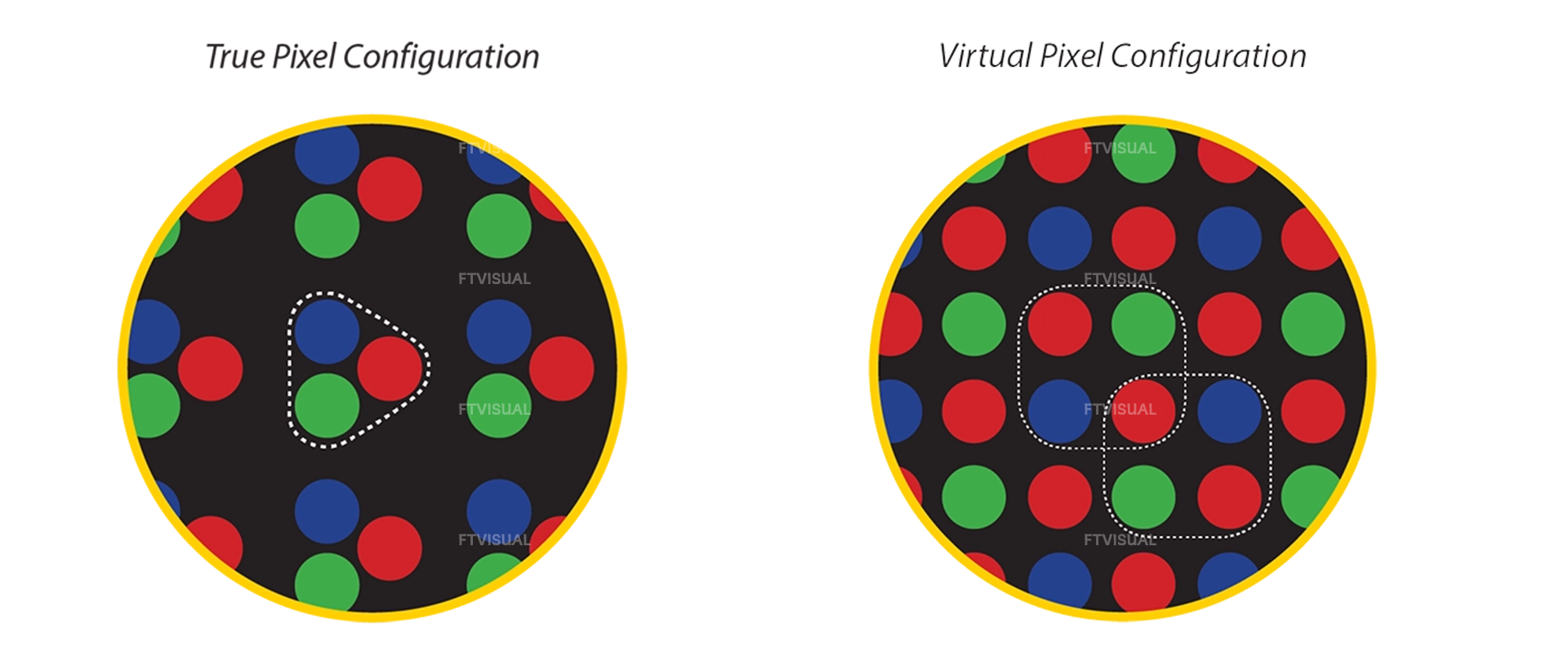
• Physical Pixels: A traditional LED wall has one distinct cluster of Red, Green, and Blue (RGB) diodes for every single pixel on the screen.• Virtual Pixels: The screen's controller uses advanced mathematical algorithms to "borrow" and share adjacent physical LEDs.
• Pixel Sharing: Virtual pixel arrangements (e.g., 2R1G1B) use overlapping patterns. Adjacent LEDs are shared dynamically to form new, intermediate pixel points.
• Persistence of Vision: The technology leverages how the human brain merges light and color. By alternating the illumination of these shared LEDs at high speeds, viewers perceive a much higher-density image than the hardware would normally produce.
• Result: A physical 4mm pixel pitch LED screen can visually perform as if it has a 2mm pixel pitch.
2.Virtual pixel Key Benefits
• Enhanced Resolution: Enables a standard display to achieve twice or even four times its native resolution.• Cost-Effective: It allows you to achieve high-definition results with fewer physical LED units, significantly lowering hardware and manufacturing costs.
• Energy Efficiency: By using fewer physical LEDs, the display can consume up to 50% less power than traditional screens of the same visual clarity.
3.Virtual pixel Common Drawbacks
Not a True Native Image: A virtual pixel will never look as perfectly sharp as an actual physical pixel of the same size.Image Blurring: Because LEDs are overlapping and shared, text and sharp graphics can sometimes bleed together, causing fuzzy edges or reduced contrast.
Color Shifting: Screens with specific virtual pixel layouts (like dual red diodes) may cause white graphics to look pink over time, as red LEDs fade at a slower rate than blue and green ones.
Reduced Maximum Brightness: Since physical LEDs are taking on the workload of multiple pixels, they cannot always emit their peak brightness for every single virtual point.
4. Where is Virtual pixel Used?
This technology is primarily utilized where cost and high-definition matter more than ultra-close viewing, such as:• Outdoor Digital Billboards where large content needs to look smooth from the street.
• Stadia & Sports Arenas where massive, high-definition scores and replays must be legible to the whole crowd.
• Control rooms and large corporate conference rooms.
• Rental displays where transportation weight and costs are heavily factored.、
FTV LED Screen Solutions
FTV offer turn-key LED screens, you can browse below:Indoor LED Wall: Super fine pitch, great visual, work for DCI-P3 Wide Color Gamut
Outdoor LED Screen: High brightness, great visual, and super robust design.
Rental LED Screen: Easy and fast to set-up, robust& reliable design.
Creative LED Screen: Customized LED Walls with various shapes.
For more solutions and customization, please be free to contact us.