
25 Feb., 2026
Frequently asked questions about video walls
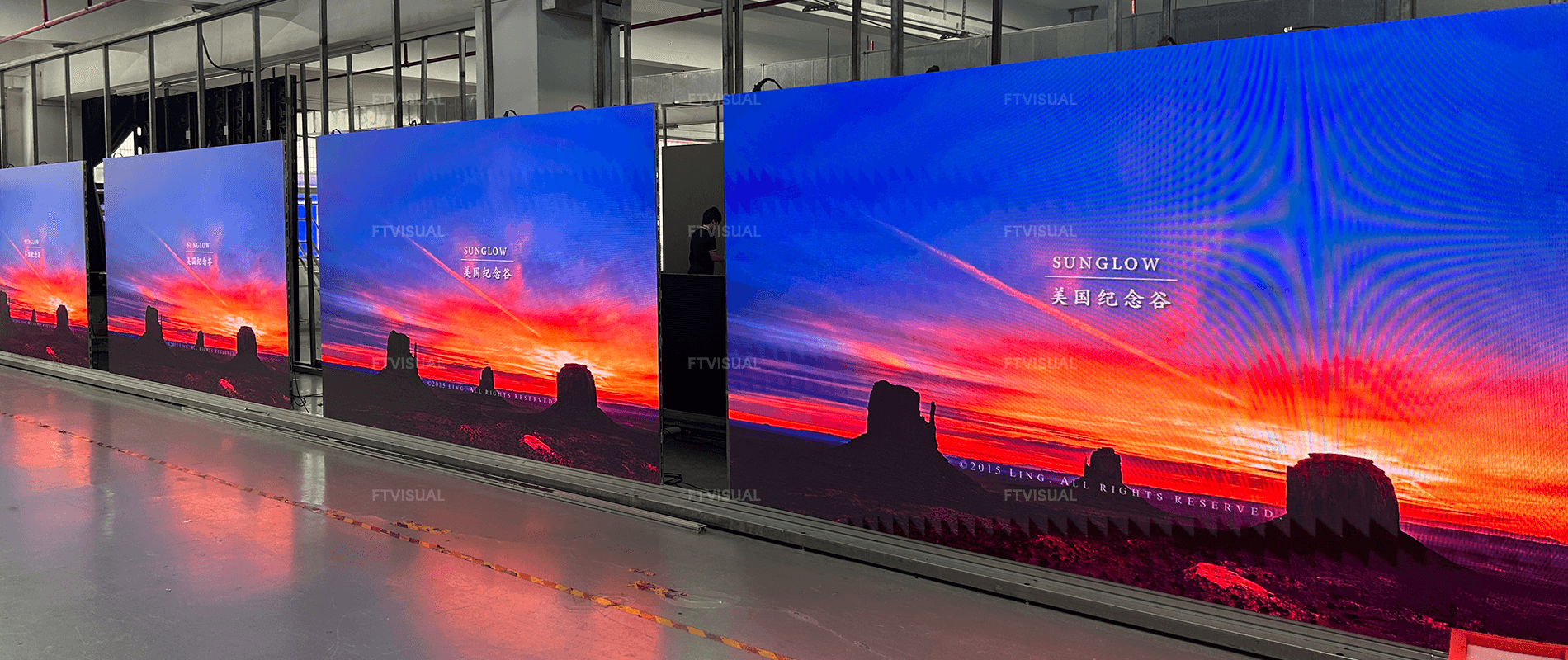
An LED video wall is a massive, seamless digital display built by connecting individual LED panels (cabinets) together. They offer distinct advantages over traditional projectors and LCD panels, delivering higher brightness, deeper contrast, and a completely bezel-free viewing experience.
The Basics of LED Video Walls
Q: How does LED WALL work?LED walls are composed of smaller building blocks called "cabinets" or "modules". Hundreds of tiny diodes shine red, green, and blue to produce full-spectrum imagery without any visible bezels or gaps.
Q: Difference of Indoor vs. Outdoor LED WALLs?
Indoor Video walls prioritize high resolution, crisp text, and lower energy use. Outdoor led walls are built to handle direct sunlight with ultra-high brightness (measured in nits), weatherproofing, and durability.
Q: How much does a video wall cost?
LED Walls price depends on the size, screen type, installation, and software. We would be happy to prepare a customized proposal.
Specs & Choosing the Right Wall
Q: What is "Pixel Pitch"?Pixel pitch refers to the distance between individual LED clusters, measured in millimeters (e.g., P1.5 is 1.5mm). For example, a 2 mm pitch is ideal for viewers standing 2 meters or further away. A smaller pixel pitch provides a higher resolution and is ideal for close viewing.
Q: How do I choose the right LED WALL size and resolution?
Your pixel pitch roughly equals your minimum viewing distance in meters. If viewers stand close to the wall, you need a tight pixel pitch (like 0.9mm to 1.5mm).
About the led wall size, refer to “How to choose the right size of led video walls?”
Q: What Is the Refresh Rate?
The refresh rate measures how many times per second the screen redraws an image, measured in Hz.
•Standard use: 3,840Hz provides smooth, flicker-free playback for typical corporate and entertainment uses.
•Professional filming/Broadcasting: 7,680Hz or higher is required to prevent visual artifacts and rolling shutter lines when recording the screen with cameras.
Q:Why choose an LED wall over a projector or LCD?
Unlike LCD walls, LED walls have no visible bezels or grid lines between panels. They also offer much higher brightness and contrast, meaning they look vibrant even in well-lit rooms or direct sunlight.
Installation & Operation
Q: How are led walls installed?LED walls are versatile. They can be wall-mounted, hanging, or ground-supported. Proper mounting requires space for ventilation and cabling, along with a dedicated power supply.
Q: How do I manage video wall content?
LED walls Content is managed using specialized Content Management Software (CMS). Processors and software allow you to scale, schedule, and switch between different media feeds like HDMI, live video, or IP-based streams.
Q: What kind of content can I display?
You can display anything from simple text to high-definition 4K video. The required resolution depends on your content: simple text messages need very little resolution, whereas vibrant video requires a high-density video display.
Q: How Much Brightness Do I Need?
LED wall Brightness is measured in nits or cd/m². It depends entirely on your environment:
•Indoor: 600 - 1,200 nits is ideal. Going too bright in a dim room causes eye strain.
•Semi-outdoor (e.g., bright windows or atriums): 1,500 - 3,000 nits.
•Outdoor: 4,000 - 5,000 nits and up. You need this high output to overcome direct sunlight so the image doesn't wash out.
Lifespan & Maintenance
Q:How long do led walls last?High-quality LED walls can last up to 100,000 hours (roughly 10+ years of operation).
Q: How are repairs handled?
Content management software (CMS) is used to schedule, format, and route video and graphics to the screen, often via a video processor that supports inputs like HDMI or IP-based feeds.